Zephyr Protocol — v1.2.0 Hardfork Announcement
Announcement and details of the upcoming changes to Zephyr Protocol
TL;DR
Fee Adjustments:
- Mint ZSD: 2% → 0.1%
- Redeem ZSD: 2% → 0.1%
- Mint ZRS: 0% → 1%
- Redeem ZRS: 2% → 1%
Development Updates:
- Supporting code for fee adjustments
- Latest updates inherited from Monero updates
- Redefining Reserve Ratio MA
Objectives:
- Maintain protocol integrity
- Promote ZSD/protocol adoption
ETA
- 8 Weeks
Overview
Zephyr Protocol is implementing changes aimed at improving its overall functionality, user adoption, and security. The update includes major protocol changes, fee adjustments, and the incorporation of recent Monero developments.
The team has been monitoring the protocol closely since the v1.0.0 implementation. The goals for this hardfork were laid out several months ago but we have intentionally delayed finalizing the details of the protocol changes due to the testing market conditions since our ATH.
Particularly after the recent “inadvertent protocol stress test” Zephyr Protocol endured we are confident that our changes are the way forward and adhere to our core overarching goals of prioritizing the ZSD peg and ensuring the incentive structure is solid for ZRS holders (Reserve Providers).
Fee Adjustments
Background
From inception, the 2% fees for minting and redeeming were known to be barriers of entry into the Zephyr Protocol ecosystem, but were in place for security and anti-protocol manipulation measures.
One of Zephyr Protocol's key innovations to our Djed implementation was to use dual asset pricing in terms of spot and moving average, where actions taken (minting/redeeming) result in using the “worst” of the 2 prices. The goal of this is to avoid any protocol manipulation via oracle front running.
Oracle front running is manipulating the price; firstly minting stables at a high price, driving price down, redeeming stables for more base coins, then driving the price back up and repeat!
In other Djed implementations the 2% fee is now standard and the main reason for this is to counter the oracle front running risk.
Zephyr Protocol’s dual asset pricing system addresses this risk better, meaning the purpose of the fees for us was to have additional measures to protect from unknown types of manipulation and provide another incentive structure for ZRS holders, as they collect this fee at the cost of potentially hampering some ZSD adoption.
Reflections
We took a conservative approach. Djed implementations are proven to work and we didn’t want to stray too much away from the proven design; and the dual asset pricing approach was already something significantly new.
Initially it felt as though a 2% minting fee (and later an additional 2% redemption fee == 4%) paid was a fair price given what Zephyr Protocol was offering over competition:
- Private Stablecoin
- Proven implementation
- Decentralized protocol
On the surface it is. In practice, taking a 4% hit for many is not worth the cost. Also with the variance in divergence of the spot and ma pricing on both sides of the trade has a pseudo fee aspect too which can be related to the 24-hour change. If the ZEPH price is +/- 5%; the spot and ma divergence is going to sit within the range of 0–3% as the ma price is the average of all the previous prices for the day.
Changes
- Minting and Redeeming ZSD (Zephyr Stable Dollar): Fees reduced from 2% to 0.1%, making it cheaper to mint and redeem stablecoins.
- This is to lower the bar for entry and to drive adoption rates. We don’t want to completely remove the fee as it is an important incentive to keep for ZRS holders. ZRS holders will benefit from increased ZSD minting and redemption rates.
We can’t predict that the effect will be direct with 20x+ minting and redemption rates which would directly cover the fee reduction but it is important to remember that ZRS holders still benefit the most from ZEPH price appreciation which driving any increased adoption into ZSD will naturally cause.
The objective is to enhance adoption wherever possible. This will facilitate arbitrage trading with liquidity provided for ZSD markets, which is essential for maintaining the ZSD peg on exchanges. The peg is achieved through arbitrage both on exchanges and within the protocol.
- Minting ZRS (Zephyr Reserve Share): Introducing a 1% fee; Redeeming ZRS Reducing fees from 2% to 1%
- ZRS has proven to be extremely desired due to its returns. Throughout a turbulent market and a significant downturn in ZEPH price (increasing the ZSD price in terms of ZEPH); The ZRS rate has held strong.
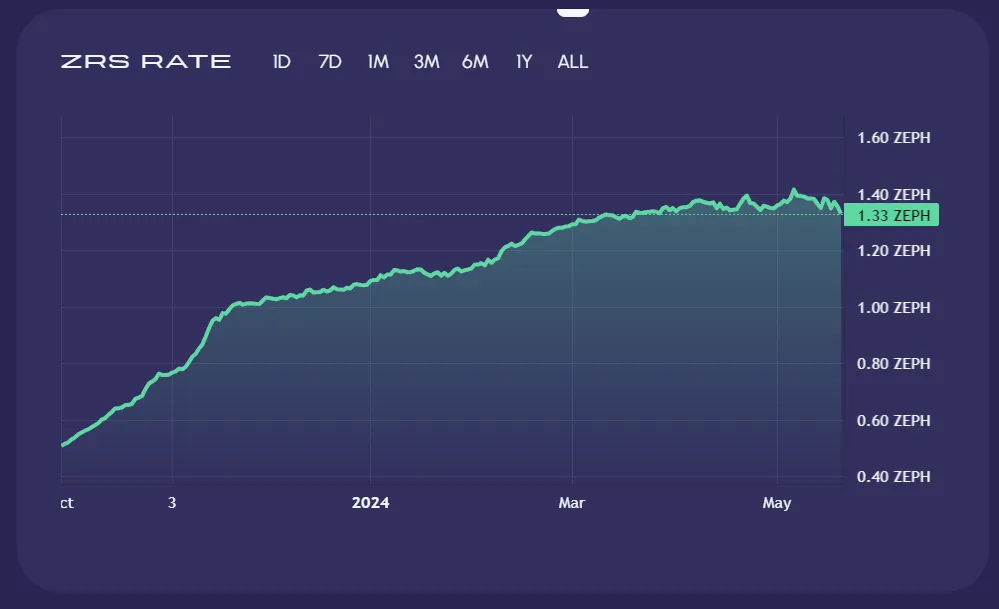
ZRS Rate since v1 launch — 0.5 ZEPH -> 1.33 ZEPH
The maximum reserve ratio is 800%, meaning additional ZRS can’t be minted above this level and we have stayed above this rate for the vast majority of the time, meaning when we dip, we tend to see a rush to enter a ZRS position.
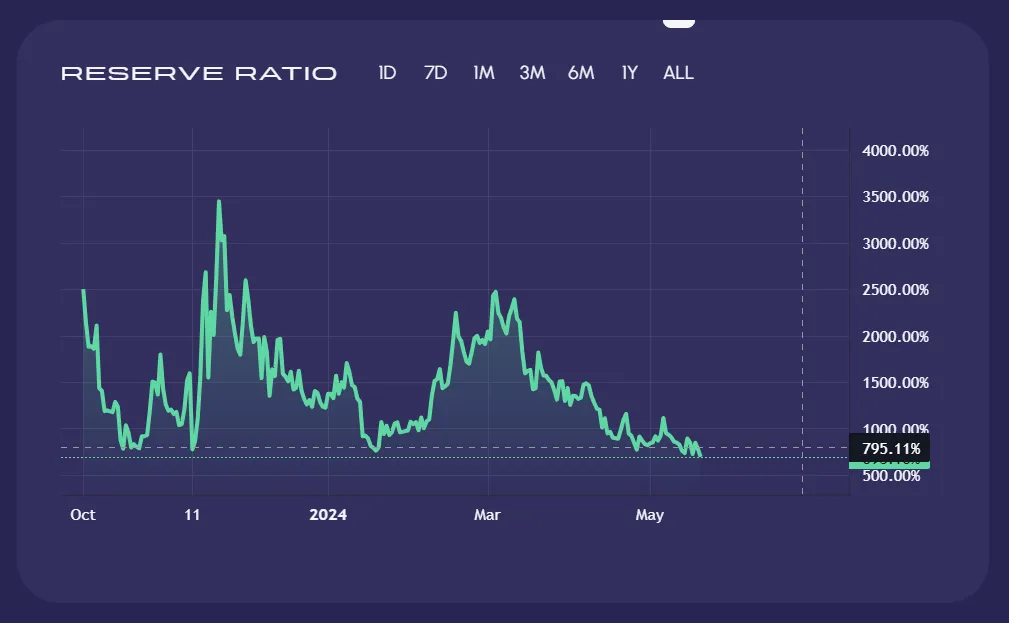
We feel that introducing this minting 1% fee is fair, and compensated by the reduced redemption fee of 1% — evening it out. New reserve providers now will help the protocol with 1/2 of the total fee initially which helps the protocol when we need it the most!
In the future having a dynamic fee for providing reserve might be preferable to this model, as if we are theoretically close to 100% reserve ratio we could even offer negative fees as incentive for when we need it the most and have 5% minting fees when we are at max.
Upstream Updates
It is imperative that we stay up to date with Monero’s improvements and changes. If our codebase deviates too much it becomes increasingly difficult to incorporate the exciting upcoming changes from Monero into Zephyr! A lot of this work has been done and can be seen on the co-authored GitHub commits.
Reserve Ratio re-definition
A challenge addressed in this hard fork is having a new way to circumvent the potential manipulation of the reserve ratio by temporarily minting ZSD. To mitigate this, we propose redefining the reserve ratio moving average (RR_MA) to be a function of previous spot reserve ratios (RR_Spot).
Currently the 2% fees for minting and redeeming have disincentivized this because it has risks and significant costs. We can’t safely reduce the fees without this change, which is a more involved change compared to the fee changes.
Current Calculation:
RR_Spot = (Zeph_Reserve * Spot_Price) / ZSD_Circulation
RR_MA = (Zeph_Reserve * MA_Price) / ZSD_Circulation
Immediate ZSD mints result in instant rr_ma crush
Proposed Change:
RR_MA will be derived from an average of previous RR_Spot values over a 24 hour period.
This method smooths out fluctuations and reduces the impact of any single actor attempting to manipulate the reserve ratio. The new calculation ensures the ratio is more stable and reflective of the protocol’s true financial health.
Conclusion
The upcoming Zephyr Protocol v1.2.0 hard fork introduces critical changes to enhance the protocol’s functionality, user adoption, and security. Key adjustments include significant reductions in minting and redemption fees for ZSD, and the introduction of a minting fee for ZRS, while reducing its redemption fee. These changes aim to lower barriers to entry, promote ZSD adoption, and maintain the ZSD peg through improved liquidity and arbitrage opportunities.
Additionally, we are integrating the latest updates from Monero and redefining the reserve ratio moving average to ensure protocol integrity and prevent manipulation. These updates reflect our commitment to improving the Zephyr Protocol while prioritizing security and user incentives.
Stay tuned for further updates and detailed announcements as we finalize and implement these exciting changes. Thank you for your continued support and involvement in the Zephyr Protocol.
ETA
We need to give exchanges 4 weeks notice and development progress is in a good place. We feel that we can soon set a date for the hardfork that will be roughly in 8 weeks time!